Tuesday, January 21, 2020

From islands to highlands in Portugal

Last week I mentioned that the first thing we did when we arrived in Olhão was to visit the island of Armona. I didn't manage to import many photos then, so I couldn't show much and had to tell more. Now we're home again, I can add some more photos to my posts, so just to show you how lovely it was, below is the boat that took us from the mainland across to the island. I took these snaps as it was approaching the quay to pick up the passengers.

The boat that took us to Armona

Approaching the quay
Nearly there
What I also wanted to show was the range of pushcarts we saw outside people's homes on Armona. Given that there really are no cars at all on these Rio Formosa islands, I thought these showed people's ingenuity in coping with carting stuff around. When I look at their life there and the mild, sunshiny weather, it looks pretty idyllic to me, but I imagine it can get tough and tiring at times, just as it does when you live on a boat. All that humping stuff around can put more than muscles on a body. Even so, I wouldn't mind giving it a try. It seems an acceptable price to pay for the peace of a carless environment and more than average amounts of sunshine. What do you think?


A doubled up shopping trolley and a flat bed push cart
Another flat bed push cart
This family have two plus the ubiquitous wheelbarrow

Antique flat bed

And then the standard variety that we often use too
Back in Olhão, and following our visit to Fuseta (see last week's post) we spent more time pottering around the city's back streets, which we both love. The juxtaposition of crumbling ruins with newly renovated traditional houses really appeals to us. It's a shame that it has to be foreign money that's reviving these old places but I can't see how the locals can afford it. Salaries are not high in Portugal and property prices are soaring. When I first came to Olhão four years ago, it felt very Portuguese and not touristy at all. Now, that's changing, which gives me mixed feelings. Without investors' money, many of these old homes would be unrecoverable, but at the same time, there's a price to pay for the community as a whole. Here are some examples of ruined and renewed side by side. Koos and I clicked away happily together in these tiny lanes. It's just as well we both enjoy doing this!


 There's a good potted history of Olhão on Wikipedia here, but one titbit I found especially interesting is that it was the people of the town who expelled the French occupiers following the Peninsular wars. They then built a boat and sailed to Brazil to urge their royal family to return to Portugal. Here's a photo of a replica of the boat which is moored on a jetty almost opposite the two distinctive market buildings.
Bom Sucesso, the 'royal yacht' :)
Olhão's two fresh fish market buildings from the water

On another day, we took a bus to the north of Olhão to the village of Estoi. Actually, we didn't. We took a train to Faro and then the bus as there wasn't one direct from Olhão, a pity as on one of our walks near our hostel we saw this old mile stone which told us Estoi wasn't far away at all. I should say I went to Estoi with my friend Marion the first time I came to Portugal, so it was great to be able to go there with Koos as well.


Anyway, as luck would have it, our train arrived just a few minutes before the bus left and so we hopped on for the half hour ride out of town and up into the hills. What a treat that was. Estoi was everything one could wish a Portuguese village to be. Built on the slopes of the hills leading to the something or other mountain range (I'll look it up, I promise *), it is a many layered village, and each layer seems to have its own square and café. There's also a stunning rococo palace that's now in use as a conference centre and hotel. Some of the additions they've made to attract guests are pretty tasteless, but the renovations to the palace itself have been done beautifully, and I can imagine it brings much needed employment and money to the village. What's more, visitors can walk around the palace gardens for free, which is a lovely gesture. You can read more about it here.

Anyone can walk around the palace gardens and enjoy their timeless beauty

The magnificent facade, beautifully restored

The beautiful azulejos tiles of the palace gardens

I loved this

One layer of the village and its square

Estoi's church

The whole village is on a steep hill


The walls of the palace painted to match

The upper level of the village

Lemons grow in profusion here
*Those mountains: Serra de Monte Figo

I think I'd better stop this here as otherwise this blog will go on forever. I'll finish off next time with some photos of my favourite rickety doors and a few photos of Vila Real de St Antonio where I had an away day on my own. I'll also write about the interesting encounter we had with a man at the bus stop in Estoi. 

For now, though, have a good week allemaal. It's back to work for me now, but having had a goodly dose of sunshine, I feel ready to face it all again.


Sunday, January 12, 2020

Ode to Olhão and other lovely places

We’ve been back in Olhão in Portugal this week, getting what I now see as an essential annual winter sunshine boost. Like last year, we’ve had glorious weather and I count my blessings that we’ve been so fortunate to have sunshine and almost cloudless skies every day so far.

Without a car or bikes, there are of course limits to what we can do, travel wise, so we’ve walked extensively, used the local train and explored a little by bus, which we hope to do more of. However, let’s not forget the boats (how could we indeed?). 

View from our hostel

Our first excursion was to the island of Armona in the Rio Formosa. Reached by ferry from Olhão, it’s  just under €3 return for a lovely trip of half an hour each way. Armona is a magical island where the only vehicles seem to be small maintenance jeep things made by John Deere tractors. Everyone who lives there gets around the island on foot or by bike. As for transporting goods, many of the houses have their own version of a pushcart parked outside. I was fascinated to see several men coming  to the ferry when we arrived, wheeling their carts to pick up goods their wives or friends had brought a across with them.


Armona at sunset

I think I could happily hole up on Armona or its neighbour, Culatra, for a winter. That kind of simple life appeals to my ideal of a pared down existence.

Back on the mainland and walking around, we noticed how there are hundreds of small cafés all over Olhão. Literally. These are very local, so the clientele seems to be people living very close by. There are always at least a few customers in each of them, the Portuguese being a very social people, but apparently they don’t all have loos (we tried), so normal rules for hostelries don’t apply. My claim is that it’s because they can just go home if they need to. What they do have is cigarette machines, something we no longer see in northern Europe, which makes it easy for Koos to feed his habit as long as he has the right change.

On Friday, we took the train to Fuseta, where we walked around the harbour, fascinated by the fishing boats with their skinny ropes. They barely look strong enough to hold a plastic bath duck, let alone a sailboat, cruiser or fishing craft. We were also intrigued to know how the owners get on board when their craft are moored several metres from the quay. And if on board, how to they get ashore? Our answer came when I saw a man in Fuseta pull his boat to the quay, jump on board to collect something and then when he was back on the quay, he pushed his boat out again with a big shove. No anchors were involved, just a weight to keep it in position when he stopped it. Amazing.


Apart from the somewhat ‘wish and a prayer’ style of mooring, I was also fascinated by the marina’s slipway, which was just constructed of lengths of wood, like railway sleepers. I’m not sure how they haul the boats up the ramp, though. The present incumbent looked as if it had been there awhile and wasn’t about to move.


Salt pans, another feature of this coastal area.

Another entertaining moment in Fuseta occurred when we walked down a side street and saw a local lady gesticulating in some agitation. She was standing over a manhole with a crushed cover, and was clearly concerned that someone might fall into it. Help arrived in the form of a council worker riding to the rescue on a 50cc scooter that was largely held together with duct tape, and I’m not exaggerating. He got off his steed, took out his weapon which happened to be a tape measure, and leant over the offending hole. Judging by the state of his scooter, we thought he must be measuring the opening to see how much duct tape he needed to fix the cover. Thoughts of Fuseta’s public structures being held together this way appealed to our sense of the absurd. Little things, eh? Here are a few more photos from our visit to Fuseta, a charming place as are many of these small Algarve towns.

Fuseta station

A fishing boat leaving the harbour


Village street, Fuseta


Well, that’s enough for the moment. I’ll write more next time as there have been other adventures and other sights, but for now, have a great week allemaal, and I hope the sun is shining in your hearts if not on your skin.


Sunday, January 05, 2020

Old and New: the step over to 2020

I wanted this first post of the new year to be largely a picture post, but I'll need to explain the first group of photos, so I hope you'll bear with me.

Firstly, happy 2020 everyone. I know it's off to a difficult start in some parts of the world, notably the tragic fires in Australia (so devastatingly awful) and the precarious situation with the US vs Iran (I'm trying not to think where that's going), but I hope that wherever you are, things are calm, safe and optimistic.

Anyway, to get back to the photos, on the 29th December, we decided to go for a walk at a place called Klein Rusland  over the border in Belgium. We've often walked around the neighbourhood before as it's always fascinated us. Initiated by the Russian founder of a nearby factory (Dmitri Peniakoff) it was built as a community for workers and its first inhabitant was also a Russian (hence the name Klein Rusland). The whole estate was designed along cubist lines by Huib Hoste and it was very much a garden suburb. 

To my mind, it should be a monument, but sadly, many of the houses are now boarded up and all the shops and businesses have gone. Why? Because (according to a local resident) an industrial magnate wants the land to extend his already huge solar panel 'farm,' which is on a site next to Klein Rusland. He must be a very patient man as many of the residents are clearly not willing to go: 'we willen blijven' (we want to stay) is a sign seen on many doorways. 


We willen blijven - we want to stay
I have to admit I have issues with situations in which people and communities are driven out of their neighbourhoods in the name of progress. I feel the same way about big dams and reservoirs where complete villages are drowned. Some may see it as a sacrifice to the greater good; however, I can't help thinking of the human sacrifice too, not in lives, but in communities that have been there for so long. Klein Rusland will be 100 years old this year. Here's an article about what has been happening there. If you open it in Google, you can have it translated.

A garden suburb with a beautiful tree-planted green in its centre

Cubist homes: very modern in their day.
Many of the boarded up houses have really attractive paintings on them, which brightens up the desolation no end – a great way to prevent random graffiti too. Here are a few of my snaps. It was a beautiful day, which somehow made the silent emptiness more poignant.


After chatting to the local man who told us about the solar panels and also the centenary, we headed to another neighbourhood close by for a cup of coffee. I was struck by these opening times on the bakery door. It seems they really do open at 04:00 in the morning. Amazing!


Then on New Year's Day, we did our traditional beach walk. It was bitterly cold, but we refused to be daunted. These photos show that others weren't either!


Although this beach was a bit empty. I can imagine it's very busy in
the summer
Then yesterday was another beautiful day so as we had a doggy guest (my daughter's spaniel, Charlie), we took a long walk around a nearby nature reserve. It always amazes me that in this densely populated little country we can walk for kilometres without seeing another soul. I love the calm tranquillity of these Dutch reed lined waters with their knotted willow trees.


So that's it for my ramblings this week. Here's a photo of Charlie to finish up with. He can snooze very thoroughly after a long walk.


By the way, if you are here, you will either have clicked on a link or you'll have seen that I've changed my blog address. I was getting so many spam comments and rubbish to filter out, I decided the new year was time for a clean slate. If you'd still like to follow me, you might want to change any saved links you have to my blog. The new blog address is rivergirlrotterdam.blogspot.com

Have a good week allemaal, and may all the fires in the world, both literal and figurative, be extinguished soon.

Sunday, December 29, 2019

The last post of 2019

This month has flown by and here we are peering expectantly into 2020.

At the end of November I mentioned I needed some time out to focus on other things. Well, one of those was a trip to the UK to visit my family, most of whom I haven't seen for far too long. It was a big birthday for one of my brothers, but prior to that I'd learned that one member of the family has some serious health problems, which made it especially important for me to see them.

We met up at one of England's lovely National Trust properties, Stowe House, which also happens to be Stowe School in Buckinghamshire. It's open to the public at weekends and has beautiful gardens which the birthday boy particularly wanted to see. I was staying with my sister and since she isn't a member of the NT, we decided to forego the garden tour. It was quite pricey and not something we really relished doing on such a cold day. However, we had a great lunch together in the café and it was wonderful to catch up with them all again. There were several nieces, plus a couple of grandchildren as well as a good show of in-laws. I only wish we could have spent longer together, and it made me aware that I need to go back more often. None of us is getting any younger; in fact, I am the youngest of the four of us.

The rest of my visit was taken up with spending special time with my sister, which I loved, and also visiting her daughters in Bristol and my long-time friend from South Africa, Moira, who works in Wells. Altogether perfect.

My sister and I talked each other's legs off – all of them, not just the hind ones, which meant that no donkeys were involved. I suspect she was quite relieved when I left. Peace at last...haha. Seriously, though, it was amazing to have so much time with her and I think we both caught up on lots of events in each other's lives that we didn't know about. Much of this was achieved while walking, so here are some photos of the beautiful parks we visited in the area.


Harrold Park, north west of Bedford

Harrold Park 
A lovely place to stop a while


There were several of these beautiful benches in Harrold Park

I've no idea what caused these holes, maybe a woodpecker?
This was the bark of a tree in Ampthill Park

The same tree in Ampthill Park. It has a strangely twisted
trunk

Magnificent panoramic views in Ampthill Park


Ampthill House, privately owned, I think

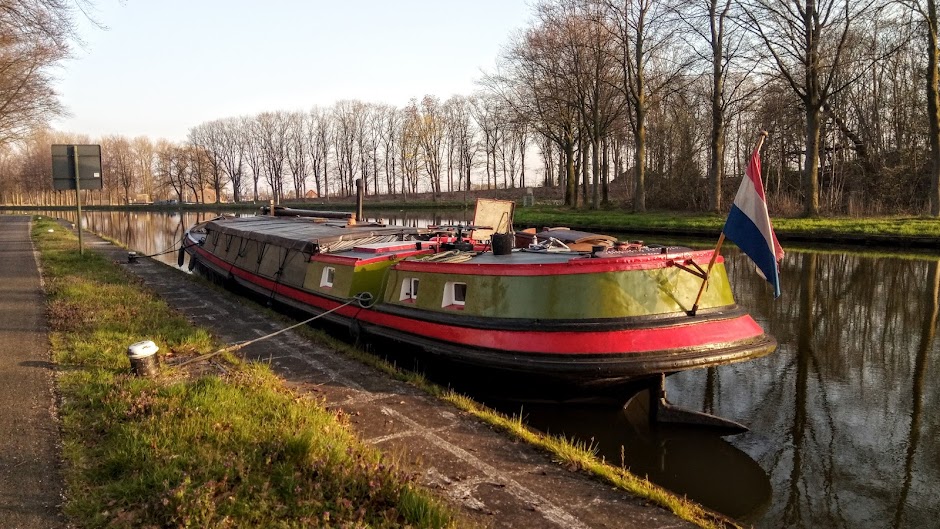
Back in the Netherlands, I had work to finish off, a family dinner with my daughters, stepsons and their partners and then of course, Christmas, which was quietly spent in Zeeland with more walking and heaps of reading. Just how I like it. As you know, waterways are a huge attraction, so here are some photos of a recent walk in Belgium along the Durme river.

The house of many colours. I was fascinated by it

The Durme on its way to the Schelde (Scheldt)

What we like: boats moored in Lokeren

And a very pretty traditional tjalk

On the liveaboard side of the moorings

That's just about summed up my absence and in that sense, the year too. Wishing all my blogging friends a very enjoyable New Year and a peaceful, harmonious and lovely 2020. Till next year allemaal.


Monday, December 23, 2019

My favourite memoirs of 2019 and other great reads

Hello dear blogging friends

I'm back here again with a post to end this year so that I can start afresh with my normal blogs again in the new year. When I was thinking about what to write, I thought about what I mostly do to escape the winter blues and that is to read. I don't know about all of you, but this year end has been difficult (as if all winters aren't, I know), but I think lots of us will have wanted to wish ourselves elsewhere for all sorts of reasons, whether they be personal, health, political or other. So I thought I would do a round up of some of the books I've most enjoyed this year. I'll start with memoirs, since I read scores of them, and then I'll add a few novels that I've found especially brilliant.

Since I'm also a bit lazy, I'm not going to add cover photos, but just links to my other blog. If you click on them, you can find my review of the book, what it looks like and a link to the Amazon purchase page, so here goes in no particular order:

1. The Rhine, by Ben Coates. This is an absolutely riveting travel, historical and personal account of the author's journey on foot, by bike and sometimes by boat from the mouth of the Rhine to its source. It's one of the best books I've ever read on this area. Beautifully written and highly recommended. My review is here

2. From Australia to Germany: An adventurous journey in a 4-wheel drive by Gus Pegel. In a completely different style from The Rhine, this is an equally riveting read. It's great fun, full of youthful exuberance and quite astonishing to think such a journey was possible only fifty years ago. My review is here

3. Fat Dogs and French Estates 4 by Beth Haslam. As the title suggests, this is number 4 in a truly delightful series about Beth's life in France with her husband, Jack, and their numerous animals, both domestic and wild. I absolutely love this whole series and look forward to each new one with great anticipation. Well worth the read for learning, laughing and loving everything this couple do. My review is here

4. Passionate Travellers by Dr Trish Nicholson. Not exactly a memoir, this is a collection of biographical stories about remarkable travellers throughout history, many of whom were women with specific missions to fulfil. The hardships they endured to achieve their dreams were astonishing and as I said in my review: "this is one of the most fascinating books I have ever read."

5. South to Barcelona by Vernon Lacey: Another beautifully written travelogue, this one reminded me of Laurie Lee's wonderful As I walked Out One Midsummer Morning in its evocative style and  picturesque images of the people he met. I savoured every word and would recommend it to all lovers of travel memoirs. My review is here

6. Along The Enchanted Way by William Blacker. This account of the author's years in rural Romania in the nineties and early years of this millennium was another riveting book written with lyrical beauty. I like learning about different places and cultures and this book ticked all my boxes. Wonderful stuff. Here's my review

7. I Wish I Could Say I was Sorry by Susie Kelly. I read this from start to finish in a day. Apart from being a deeply personal account of the author's years from childhood to adulthood in Kenya, it offered a wonderful picture of Kenya, a country Susie Kelly loved with a deep and abiding passion. Very well written, very honest and sometimes jaw dropping, it is totally compelling. Here's my review

8. A Kilo of String by Rob Johnson. This book made me laugh till I cried. That might not be the best recommendation for a memoir because everyone's sense of humour is different, but I have to include it because of the sheer enjoyment I had in reading it. In essence it's about the author's life in Greece and his observations on Greek culture and customs. Read my review and see for yourself.

9. The Volcano, Montserrat and Me by Lally Brown. This one stood out as a remarkable testament to the courage and endurance of both the islanders of Montserrat and the author herself. I've read all three of her books, but this one made the deepest impression. It's history as she lived it and it is really incredible. I had no idea what it was like to live in the shadow of a volcano until I read it. My review is here

10. Mobility Matters by Amy Bovaird. As I've said, I like to learn from the memoirs I read and from Amy's heartwarming but detailed and moving account of learning how to use her blind person's cane, I gained just a glimpse of what it means to be blind. Amy Bovaird is an inspiration and I loved this book as my review hopefully shows.

I could add a dozen more to this list, but I really need to stop here. However, I'll just mention a few other terrific memoirs I've read, all of which I've reviewed on my other blog, so I'll give the titles as links:

Random by Adrian Sturrock (a collection of 'random' stories, also incredibly funny)
Boating with Buster by Alison Alderton (a gorgeous book about boating travels with the author's beagle)
The Furthest Points by Andy Hewitt (a fabulous ride around Spain on a Harley Davidson)
Summer of 77: Beaches, Bars and Boogie Nights in Ibiza by Robert Fear (a sunshiny and fun look back to the 70s)

As for novels, this is probably easier as I haven't reviewed them on my blog, so only those that remain in my memory can be included and again, they're in no particular order.

A. Lucinda E Clarke's Savage Safari: number 5 in her Amie series and the best so far. I romped through it. Such a great read, especially because Lucinda has such a fantastic way of evoking the Africa that I love. Here's my Goodreads review

B. Christina James's Gentleman Jack: to my mind the best in the series after the first one. A truly excellent crime thriller and police procedural. My Goodreads review is here

C. Lisette Brody's Hotel Obscure: a collection of themed short stories set in a run down and anonymous hotel in an unnamed city. To me, these are just brilliant and I loved them. Another Goodreads review for you.

D. Terry Tyler's Hope: a real wow of a read. I found it totally unputdownable and so real, it almost made me think it could happen. Excellent, gripping and with Terry Tyler's hallmark of a great character driven plot. This should be on everyone's TBR list. The review is here

E. Stephanie Parker McKean's Fog Buster series, all of them. I loved this madcap series of what is now known as cosy mysteries. This one involves a group of senior citizens who team up to become private investigators. Great fun and very colourful. Here's my review of one I read this year.

F. L M Krier's DI Darling series, again all of them. I am completely addicted to crime fiction and this series is one of my absolute favourites. Here's a review of the one I've read most recently, and to my mind one of the best.

G. Peter Davey's Nicole: I just love anything Peter Davey writes. To me, he's a master of craft and all his books leave me feeling I wish I'd written that. His style, his understated stories, his exploration of how people think and feel, all these rhyme with how I'd like to write fiction, but don't. This one is a novella and a very moving story that I only got when I reached the end, but then that's always the way with Peter's writing. Here's my review of Nicole.

H. Carol Hedges' Intrigue and Infamy. Once again, this is the latest of a series I absolutely love. All of them are set in Victorian London with all the atmosphere and colour of Dickens but the satire and humour of Jane Austin thrown. All this is wrapped up in Carol's own voice which brings in social comment relevant to today. Intrigue and Infamy is a must read for what's happening right now. See my review.

I. Diana J Febry's DI Hatherall police procedural series is another that I 'buy without question.' Always good value with strong and consistent characters, The Paper Boy is a very enjoyable addition to the collection. I read this in a day, and you can see my review here. Diana has also started writing a new series, the first of which is Trouble at Clenchers Mill. I enjoyed that very much as well.

There are probably more and I apologise to those excellent authors I can't bring to mind right now, but I hope this gives you some ideas of good reading material for the holidays if you are short of some suggestions.

Wishing you all a wonderful festive season, some great reading and a sparkling new year. I'll be back soon and with my usual posts on life in my watery world.