Life is a bit fraught at the moment. This is a very busy time of year in the world of freelance teaching. I've learnt through twelve years of experience that you have to cram in as much as possible between September and April, because the rest of the year tends to be a bit too quiet. Right now, we're at the peak of the period and I scarcely have time to breathe, let alone eat or have a cup of coffee between classes. I often come home after 7 straight teaching hours realising I haven't had anything to drink since I left the house in the morning. No good, not healthy, but no time for anything else. The result is I currently feel like all the expressions for being tired rolled up into one big mixed metaphor. To sum it up, I'm hanging on to my sanity by a thread, reaching the end of my tether, stretching to breaking point and threatening to be off with the fairies. Ha!
In between all this, though, I have managed to read a really great book. The one and (for me) only advantage of the cold weather is that I have stopped cycling. It's way too bitter to even contemplate. So I take the bus and read on the thirty minute ride to work. I don't have a Kindle, and a proper book is the only alternative.
Now a few weeks ago, I happened to buy In the Family by Christina James. Its a long time since I read a detective/crime book with any real pleasure. The last one was Deborah Crombie's latest, but apart from hers and Donna Leon's, I have largely been 'off' crime fiction. It has become too 'shock and gore' for my tastes. It was consequently with a smidgin of trepidation that I started reading Christina's book.
Perhaps I should mention here that Christina is a recent blog contact. I love her posts and when I have time, I'm a regular visitor to her page, so I thought I'd give her book a try too. And, I'm glad I did because I thoroughly enjoyed it. Christina has restored my taste for detective fiction by proving that a good police drama need not be about horrific, ghastly descriptions of the most brutal types of crime. In The Family is a book of puzzles, and I was continually trying to unravel the mystery surrounding the sad and very dysfunctional family around which the novel revolves. At each stage you think you know 'who dunnit', but in the end, nothing is quite as it seems; the only confirmation is what you, and everyone else, feel about the main character, but I won't tell you here who or what that is. I can rather recommend that you read it for yourselves.
It is a thoughtful and challenging novel in the tradition of PD James, Elizabeth George and Deborah Crombie, but for me it was closer to Ms Crombie than the other two because it had all the humanity without the darkness that seems to have become part of Elizabeth George's later books.
As I said, a great read and one of those unputdownable novels. I couldn't wait for my next bus ride home or the chance to go to bed and read till far too late.
Thank you Christina, and thank you for giving me a book to get excited about. I am now, of course, thoroughly looking forward to the next one.
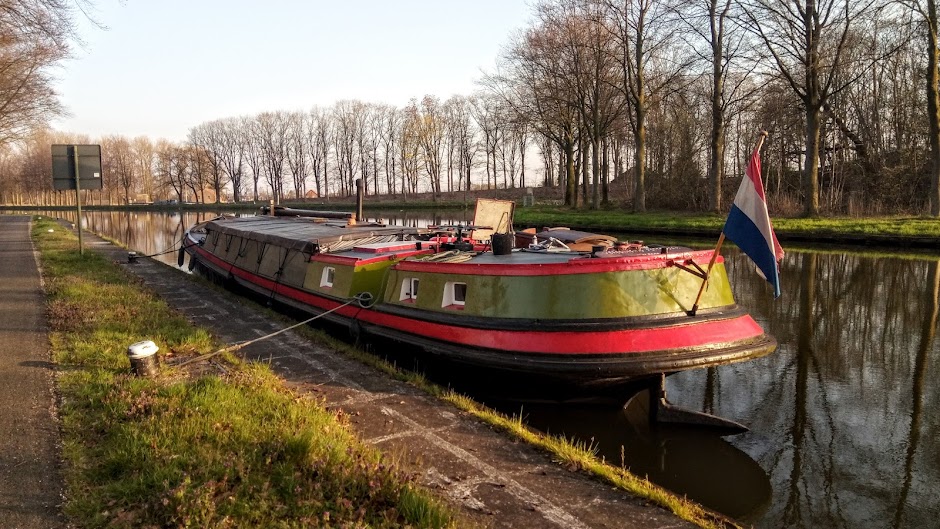
RIVERGIRL: books, blog and barges: My posts are mini-memoirs about life on a barge, our travels and the Netherlands. Oh and sometimes about my writing.
Saturday, February 23, 2013

Friday, February 08, 2013
Reporter, Writer, Communications Officer, Novelist: the diverse talents of Chris Hill

Chris, you're a successful writer in both the literary world and the world of journalism and newspaper reporting. I've been reading your blog for a while now and I always enjoy what you have to say about writing and being an author. I have your novel, Song of the Sea God, but have only dipped into the first few pages so far. It already looks compelling, but I promised myself I would finish another book I'm reading first, so it's waiting for me! Still, you seem to have been writing for some time and have won some important short story awards, so I have a heap of questions to ask.
* My first question is when did you start writing fiction as opposed to the factual pieces you had to write as a reporter, and why?
I remember writing creatively as a child - maybe even as early as junior school. I used to write scraps in the back of old school notebooks - not proper stories or poems, but attempts at fiction certainly. I can’t remember why I started but I always loved reading and I suppose it grew out of that. Writing as a journalist came along later.
* Maybe I should have put this first, but I'm curious about your career as a journalist. Who did you work for and as what kind of reporter? And did you enjoy journalism?
I worked on regional newspapers in England. I started out as a reporter after university on my home town paper in Barrow-in-Furness and I was a crime reporter for some time, which was exciting when you are young, chasing round with the police, going to murder scenes and so on. I did a bit of shifting on some big city papers like Liverpool Post and Echo and even a few on the Daily Express in London then later I moved to Gloucestershire where I still live and I was news editor of the evening paper in the city. It was just at the time when the Fred and Rose West, House of Horrors, case was going on. They were a lovely couple who assaulted and murdered a large number of women and girls, including some of their own children. Working on a story like that certainly makes you question your conception of man as nature’s final word. Later I was editor of a weekly newspaper in Gloucestershire.
* Oh my, I remember the West case! That must have been pretty grim, but now I'm wondering whether you need to put on a very different writing 'hat' for fiction from the one you would as a journalist.
Quite different yes, but there is some cross over I would say. I think the discipline you learn writing news and features helps when you are writing fiction for example. But there are differences too - for example, in fiction you are often hinting at and implying certain truths about the characters and the story - when in journalism the trick is often to say things as clearly and plainly as possible so there’s no room for doubt.
* Ha, yes, the whole four C's thing! A different approach to the craft altogether. Chris, I've read a bit of th e background to your novel, Song of the Sea God, but could you tell the readers here why you decided to write a novel after being a successful short story writer, and what inspired this novel set on an island off the coast of England?
I suppose I always saw myself as a novelist in waiting, even while I was writing stories. I’ve actually written three novels now - this one is the second I wrote and I’m hoping my most recent one might make an appearance at some point if I can find a publisher whose list it fits.
The reason the book is set on and island off the coast of Northern England is that I grew up on just such an island - Walney which is off the coast of Cumbria. I set the book in a kind of imagined version of Walney as I felt it was easier to write about somewhere I knew. I only borrowed the geography though - I’m always careful to say that the plot and the characters in the book are not related to the people I grew up with on Walney! Having this place I knew well as a solid bedrock to build on meant I could embark on my flights of fancy and create my not quite real world, whilst still anchoring it to something which truly existed.
*That's interesting. A blend of keeping to what you know for the background with having the freedom to be creative within a familiar sphere. But, Chris, according to your blog, you now work in communications. That's quite a broad term these days and I was wondering if you could tell us a bit about what you do?
I’m communications officer for UK children's charity called WellChild. I handle their PR, website, social media, publications such as magazines and so on. it’s a brilliant job as I feel I’m working for an organisation which does real good. They provide children’s nurses for example, whose job it is to get very seriously ill children out of hospital, where they can spend months and even years, and organise for them to be cared for in the family home with the right care and support. It transforms families and gives hope and quality of life to people who really need it.
* Wow! That's fantastic. You must go home every day with a great sense of fulfilment. Another thing I'm curious about is whether you find your experience as an editor helpful when it comes to writing a novel.
I do indeed. I think being able to self edit is one of the key skills you need as a writer. You need to be able to go back to the text afresh, almost as though somebody else has written it, and take a clear sighted view of what works and what does not. Having said that we all need another editor in the end I think - my publisher found a couple of real clangers in my book for me which I had missed despite, or perhaps because, I had rewritten it so thoroughly.
* Yes, that's happened to me too. Now about the book: from what I've read of it, it's quite edgy in its tone. The descriptions are sharp, vivid and quite raw. There is a bite to it and I sense it is going to be quite a moody book that speaks to us in some way. In fact, it feels like literature. Would you agree with that impression?
I guess that’s a fair summary in some respects. What’s surprised me about the reaction to the book so far is that it seems to be different things to different people. If you take a look at the reviews it’s had on the UK an US Amazon sites you’ll see what I mean. Some people say it’s dark and menacing, others that it’s funny, others that it’s lyrical. I’m delighted with all this because what I really wanted was for it to be rich and layered and hard to pin down. I’m hoping the fact that people hold a range of opinions on it means I might have gone some way towards achieving that.
* Well, I'll let you know what my final impression is when I've finished it...maybe all of the above! Chris, you are quite a presence on Twitter, and you come across as a very cheerful, easy going and friendly soul who does all the normal, family stuff that we all do. Is your literary side a reflection of another kind of Chris, or is Song of the Sea God's central character a complete creation?
Well thank you for saying so and I’m sure my wife would describe my personality in precisely the same glowing tones as you have! I am reasonably cheerful as it goes but I don’t think I’ve ever met a person who doesn’t have different aspects to their personality. We’re like Russian dolls us human beings I think, all different character traits in one.
The other thing I would say is that characters in literature are pure creations rather than mirrors of their creators, and often they are there to make the wider novel work or create an effect for the reader. Bes, the narrator of Song of the Sea God is its beating heart of the book and in some ways its moral compass I would say (though a often a faulty compass). The main character John Love is charismatic, driven and focussed on his strange and wonderful obsession.
* Yes, I can see that these characters would operate on a wider stage than a personal reflection would do. But Chris, this is the question every aspiring writer wants to know (of course): how is the book doing, and are you close to being able to give up your day job?
Absolutely nowhere near it I’m afraid. My book seems to be doing ok for a literary novel by an unknown first time author but let’s be honest, it’s never going to sell like Harry Potter. I’m just glad people are reading it, and, because of social media they are reading it around the world - in the USA, Canada, Australia and so on as well as in the UK. Only in very small numbers though! If you want to add to this select, but growing, group of readers you can find it on Amazon here.

I have another one waiting to go. It’s lighter, funnier - and probably not suitable for my current publisher’s list - so that’s me looking for another publisher - and they are quite tricky customers to find. I’ve been having a rest from writing but I’ll be starting another novel as soon as I find an idea I like enough to motivate me to do it.
*Oh and just one more! Do you have any short story collections available? I'd love to read some of them as I'm quite a short story fan.I have lots of short stories - enough for a decent collection I would say. I used to write them a lot and still do quite often. I’d love to get a collection published at some point.
* Oh do let me know when you have! Chris, thanks so very much for coming on to Watery Ways. It's been really great to have you here and I'm even more impressed about what you do than I was already - which was a lot!
Hey, thanks for interviewing me Val - it’s been really fun!
You can read Chris's blog here too. It's always a really interesting read and he has plenty of good ideas and thoughts to share for readers and writers both.Saturday, February 02, 2013
Insecurity
It's funny how it happens sometimes. I have great, long spells of writing when everything flows, when I am inspired: dialogue whips with the razor sharpness of a duel through my imagination (well, I imagine it's razor sharp), scenes and counter scenes are played out with scintillating brilliance in my mind's eye (this is all theory of course), and then... wham, bam, insecurity sets in. I read what I've written, pick it apart, look at it again, and then again, and end up finding it trite. Even pointless. Gloom descends.
Now I've always known I'm what I call a lightweight when it comes to writing. Shallow and undemanding, that's me. Somebody once referred to my writing as 'storifying'. That put me in my literary box well and truly. It's true, though. In all seriousness, I don't do dark, or even psychological. Reading it is fine, and I enjoy a good solid, meaty, get-my-teeth into it psychological drama, but I can't do it myself. My voice is just not cut out for it. The urge to laugh just cannot be quelled, so it just creeps in, even when I'm trying to be at the very least thoughtful.
So if I know this, why the insecurity? I have no idea. At times like this even this blog seems a bit stale. Maybe I just get bored with myself and want a different me to speak.
I'm having a spell like that at the moment. I just want to go to my book document, select all and press the delete button on my laptop. It would be a bit drastic, that I do realise, and it's probably just as well I have backups of it in so many places it would take too much trouble to find them all. Tempting, though.
I hope the feeling passes soon and I can enjoy my writing self again.
Do any of the other writers out there feel the same way?
Now I've always known I'm what I call a lightweight when it comes to writing. Shallow and undemanding, that's me. Somebody once referred to my writing as 'storifying'. That put me in my literary box well and truly. It's true, though. In all seriousness, I don't do dark, or even psychological. Reading it is fine, and I enjoy a good solid, meaty, get-my-teeth into it psychological drama, but I can't do it myself. My voice is just not cut out for it. The urge to laugh just cannot be quelled, so it just creeps in, even when I'm trying to be at the very least thoughtful.
So if I know this, why the insecurity? I have no idea. At times like this even this blog seems a bit stale. Maybe I just get bored with myself and want a different me to speak.
I'm having a spell like that at the moment. I just want to go to my book document, select all and press the delete button on my laptop. It would be a bit drastic, that I do realise, and it's probably just as well I have backups of it in so many places it would take too much trouble to find them all. Tempting, though.
I hope the feeling passes soon and I can enjoy my writing self again.
Do any of the other writers out there feel the same way?
Saturday, January 26, 2013
I wonder why....
When I moved to South Africa in the early nineteen eighties, I adopted everything about my new country that affected me personally and culturally. Part of that was the musical background. I learned to know and love artists like Mango Groove, Johnny Clegg, Ladysmith Black Mambaza , Miriam Makeba and numerous other uniquely South African musicians. There was, however, one voice, one soul, one artist, whose music was everywhere and who I just accepted as part of the scene. That artist was a man by the name of Rodriguez. His songs were one of the sounds of the South Africa of the 80's and 90's. Every time you went out to a cafe, bar or pizza restaurant, you heard "Sugarman", "I wonder why", and "I'll Slip Away" - beautiful, haunting songs with lyrics to make you search your soul.
The thing was I never thought beyond that. Rodriguez was a hugely popular artist in South Africa, so I assumed he was equally popular elsewhere - at the time.
Life has move on since then and at the beginning of this millenium, I moved to the Netherlands where I learned to appreciate the music produced here. Rodriguez was not exactly forgotten, but was relegated to that fond place in my playlists that was occupied by other South African favourites. But what I never realised was that he was not actually known anywhere outside of South Africa.
I have this evening just watched a very moving film called Searching for Sugarman. It is the story of Rodriguez, a modest labourer from Detroit with the soul of a poet. He recorded an album called Cold Fact in 1970 that was critically highly acclaimed, but which totally bombed in the U.S. By chance, though, an Amercian girl, visiting her boyfriend in South Africa, took a bootleg copy with her. It was the era of Apartheid and so the record was not produced officially. Much of it was actually banned, because of its controversial lyrics. But, as we say these days, it went viral in the South Africa of the time and from that one copy, more than half a million were subsequently sold - which is a lot for a third world country under a repressive regime.
What is even more remarkable is that Rodriguez himself had no clue that his record had achieved such popularity in that far off land. In fact, no one knew, simply because the regime of the day in South Africa did not encourage outside interference. And anyway, sanctions were in place. In South Africa, he was a mega star, but at home, Rodriguez gave up hopes of a musical career in Detroit and went back to renovating houses. His records continued to be sold in South Africa and his popularity continued, but there it stopped and any knowledge about the singer faded into obscurity.
Nevertheless, in the nineteen nineties, two South Africans, one a journalist and the other a jeweller, decided to set out to see if they could find what had happened to this star of theirs. No one in the country had any idea of who he was and what had happened to him in the intervening years. Reports abounded that he had rather dramatically committed suicide on stage. And this is where the documentary film comes in.
Searching for Sugarman tells of their search for Rodriguez, and how they found him, still working as a labourer in downtown Detroit. The knowledge that he had become something of a folk and national hero in South Africa surprised but did not fase him, and when he ultimately made a concert tour to the country that so idolised him, he took it all in his modest stride. He played to concerts of thousands several times over, but still returned to his honest and basic lifestyle back in Detroit.
This is a beautiful and touchingly sincere film. It has also been a huge success. It has had rave reviews and more stars than you can count. For me, though, it has a wealth of memories, feelings and associations too. Rodriguez was a major part of the cultural scene in our South African life. I took it all for granted at the time, and didn't even remember it until my daughter just started singing his songs as if it was as natural as breathing. Somehow, that makes this story all the more moving.
I hope Sixto Rodriguez now has the opportunity to reap some of the rewards of his South African fame in his old age. The strangeness of this story is what makes it special, but the loyalty of his fan base across the social and political barriers that were South Africa make it unique.
Does anyone else have a story about music that means something or is associated with a certain time in your life?
ps: for an even more enthusiastic blog post about this story see Hilary's blog post from November last year. I didn't know about it when she wrote this, being a recent contact of hers, but it is a brilliant blog and describes her own discovery of the film and more of its story.
The thing was I never thought beyond that. Rodriguez was a hugely popular artist in South Africa, so I assumed he was equally popular elsewhere - at the time.
Life has move on since then and at the beginning of this millenium, I moved to the Netherlands where I learned to appreciate the music produced here. Rodriguez was not exactly forgotten, but was relegated to that fond place in my playlists that was occupied by other South African favourites. But what I never realised was that he was not actually known anywhere outside of South Africa.
I have this evening just watched a very moving film called Searching for Sugarman. It is the story of Rodriguez, a modest labourer from Detroit with the soul of a poet. He recorded an album called Cold Fact in 1970 that was critically highly acclaimed, but which totally bombed in the U.S. By chance, though, an Amercian girl, visiting her boyfriend in South Africa, took a bootleg copy with her. It was the era of Apartheid and so the record was not produced officially. Much of it was actually banned, because of its controversial lyrics. But, as we say these days, it went viral in the South Africa of the time and from that one copy, more than half a million were subsequently sold - which is a lot for a third world country under a repressive regime.
What is even more remarkable is that Rodriguez himself had no clue that his record had achieved such popularity in that far off land. In fact, no one knew, simply because the regime of the day in South Africa did not encourage outside interference. And anyway, sanctions were in place. In South Africa, he was a mega star, but at home, Rodriguez gave up hopes of a musical career in Detroit and went back to renovating houses. His records continued to be sold in South Africa and his popularity continued, but there it stopped and any knowledge about the singer faded into obscurity.
Nevertheless, in the nineteen nineties, two South Africans, one a journalist and the other a jeweller, decided to set out to see if they could find what had happened to this star of theirs. No one in the country had any idea of who he was and what had happened to him in the intervening years. Reports abounded that he had rather dramatically committed suicide on stage. And this is where the documentary film comes in.
Searching for Sugarman tells of their search for Rodriguez, and how they found him, still working as a labourer in downtown Detroit. The knowledge that he had become something of a folk and national hero in South Africa surprised but did not fase him, and when he ultimately made a concert tour to the country that so idolised him, he took it all in his modest stride. He played to concerts of thousands several times over, but still returned to his honest and basic lifestyle back in Detroit.
This is a beautiful and touchingly sincere film. It has also been a huge success. It has had rave reviews and more stars than you can count. For me, though, it has a wealth of memories, feelings and associations too. Rodriguez was a major part of the cultural scene in our South African life. I took it all for granted at the time, and didn't even remember it until my daughter just started singing his songs as if it was as natural as breathing. Somehow, that makes this story all the more moving.
I hope Sixto Rodriguez now has the opportunity to reap some of the rewards of his South African fame in his old age. The strangeness of this story is what makes it special, but the loyalty of his fan base across the social and political barriers that were South Africa make it unique.
Does anyone else have a story about music that means something or is associated with a certain time in your life?
ps: for an even more enthusiastic blog post about this story see Hilary's blog post from November last year. I didn't know about it when she wrote this, being a recent contact of hers, but it is a brilliant blog and describes her own discovery of the film and more of its story.
Saturday, January 19, 2013
Everybody stop! We're on a Go-Snow
 |
| Families skating on the pond in our Zeeland village last year |
Nonetheless, the trains have been running at half their normal capacity all week, and the buses have only been running half of half of that. There I've been every morning at the bus stop, stamping my feet to keep the blood circulating all the way to my toes and watching that blessed digital board announce the advent of numerous buses I might have taken had they simply turned up. It's actually been quite an adventure in transportation...I've been publicly transported to places even Dr Spock of Startrek fame would have found surprising. Seriously, though, what's happened is that I've ended up jumping on any bus that looked as if it was going in vaguely the right direction, so I've seen parts of the city I never knew existed. Quite enlightening in some ways.
Still, at least I have managed to get to work, and was only a few minutes late just one day this week. Many of my colleagues have just given up the fight and gone home - although I have to say these are mostly folk who come by car. One of them told me it took her three and a half hours to drive three kilometres. Makes you wonder why she didn't just get out and walk. She might have got somewhere instead of looking wistfully at the queue of lights in front of her.
Anyhow, this is condition normal every year. We get a few grains of snow and the world comes to a grinding halt. I just don't understand it. I mean it's not as if snow is so unusual. We've certainly had a spell of it every year since I've been here.
It always makes me laugh because the locals are very keen to tell me me we don't really have winter in NL. Then they act all surprised when year after year, the temperature plummets in January and the white blanket descends. The thing is, folks, it does happen. Every year! Not for long, I grant you. Probably no more than a couple of weeks, but surprise surprise, it's not a rare occasion. So why does everything go belly up and totally haywire? And why are the train services and buses not prepared the way they are in other cold countries? My Russian and Polish friends here think it's hysterical and are totally bemused by the chaos that ensues after our annual 'episnowed'.

 |
| A smattering of snow creates its own hazards on board |
But forget the adventures in transport for a moment. The fun part of this for me is negotiating the boat. If you have a look at the few pics I've posted here, you'll notice it's no small endeavour getting on and off in this kind of weather. It's like crossing the great divide where the risk of slithering off into the icy depths of the harbour becomes the daily challenge. Maybe that's why I'm a bit bemused by all the other fuss. When you have this as your daily yardstick, all the rest seems a bit paltry...doesn't it?
 |
| No snow here, but when it's cold, the east wind causes very low tides. At these times the plank doesn't even reach the deck |
Saturday, January 12, 2013
Reaching out for the Rhinos
This last week, I have been reading another compelling and heart wrenching book by Lawrence Anthony, the great South African conservationist otherwise known as the Elephant Whisperer. I have read the book that gave him his nickname, and also Babylon's Ark, the amazing account of his courageous mission to save the animals in Baghdad's beleaguered zoo shortly after the US invasion when the city was in total disarray. However, The Last Rhinos is, if anything, even more compelling. Throughout this remarkable account of his campaign to save the last of the Northern White Rhinos in the Democratic Republic of Congo (DRC) is the underlying and desperate fear that these wonderful and ancient animals will soon be extinct if we cannot stop the poaching and slaughter being carried out. For what? For just their horns. And for what reason? So that an oriental belief that they have some kind of medicinal value for fevers (see this link) can be satisfied. Their horns have a massive black market value (some say more than gold), and conservationists throughout Africa and Asia are literally fighting to the death to protect the remaining rhinos from extinction.
Now, I am not a scientist and I don't know whether their powdered horns have any real medicinal worth or not, but given that there are so many other means of alleviating fevers and similar ailments, it is iniquitous that any animal's life should be placed at risk of a cruel and savage death for this purpose, let alone an animal that is on the brink of extinction. What is fact is that their horns are simple keratin. As Lawrence Anthony says, we might as well send them our finger nail and toenail clippings. The substance is the same.
You have to ask what on earth those who poach them will do when all the rhinos are gone? In pragmatic terms, why kill these animals to the point where there are absolutely none left. Anywhere. Animals that have been on this earth for thousands of years. It beggars belief. Talk about killing the goose that lays the golden egg.
The terrible truth, however, is that despite Lawrence Anthony and truly brave conservation fighters like him who are increasing public awareness worldwide, the poaching figures are growing.
Lawrence Anthony died last year. I was first alerted to his work when a South African friend on FB 'shared' the touching story of how his elephants mourned his death. Since then, I have been spellbound by his books and awed by his endless fund of courage. He gained the trust of governments and rebel armies alike, being probably the only civilian to have formed a working relationship with the notorious LRA in Uganda and the DRC. The bravery he showed simply in an effort to stop the poaching and save the Rhinos is almost beyond human, but he did not do it alone, thank goodness. His family and close friends were there with him on several of these missions and I can only be thankful that these great souls, and many many others like them, are still alive and still fighting for our animal kingdom.
I haven't finished the book yet and am not really sure I want to know the outcome as I fear it will not be a happy one. What has happened since he died certainly isn't optimistic. The figures are horrific and according to the Helping Rhinos Facebook page, two rhinos have been found dead with their horns removed in just the last couple of days.
This sort of situation makes me feel quite desperate. This is not about saving animals over people. Rhino horn doesn't feed people, nor does it save people's lives. The dead rhinos are left to rot. It is exploitation at its most mercenary and ugly.
A few weeks ago, I read an academic paper about the importance of preserving our 'ecosystem services'. The conservation of all our ecosystems, animal and plant, is important to our own survival. We have to work with our natural world and not destroy it simply to gratify a short term desire or perceived need. If we do that, we will ultimately destroy ourselves as the world that we rely on to nourish us will no longer be able to serve us.
The Last Rhinos is a compelling, exciting book, but it is also a very serious one. This kind of exploitation has to stop. It is neither the fault of those who live among the rhinos, nor those who are persuaded into believing their horns have medicinal value. It is the fault of the poaching cartels who are cashing in on a get rich quick opportunity. This kind of short-sighted greed has to end. It is as shameful as it is devastating.
Now, I am not a scientist and I don't know whether their powdered horns have any real medicinal worth or not, but given that there are so many other means of alleviating fevers and similar ailments, it is iniquitous that any animal's life should be placed at risk of a cruel and savage death for this purpose, let alone an animal that is on the brink of extinction. What is fact is that their horns are simple keratin. As Lawrence Anthony says, we might as well send them our finger nail and toenail clippings. The substance is the same.
You have to ask what on earth those who poach them will do when all the rhinos are gone? In pragmatic terms, why kill these animals to the point where there are absolutely none left. Anywhere. Animals that have been on this earth for thousands of years. It beggars belief. Talk about killing the goose that lays the golden egg.
The terrible truth, however, is that despite Lawrence Anthony and truly brave conservation fighters like him who are increasing public awareness worldwide, the poaching figures are growing.
Lawrence Anthony died last year. I was first alerted to his work when a South African friend on FB 'shared' the touching story of how his elephants mourned his death. Since then, I have been spellbound by his books and awed by his endless fund of courage. He gained the trust of governments and rebel armies alike, being probably the only civilian to have formed a working relationship with the notorious LRA in Uganda and the DRC. The bravery he showed simply in an effort to stop the poaching and save the Rhinos is almost beyond human, but he did not do it alone, thank goodness. His family and close friends were there with him on several of these missions and I can only be thankful that these great souls, and many many others like them, are still alive and still fighting for our animal kingdom.
I haven't finished the book yet and am not really sure I want to know the outcome as I fear it will not be a happy one. What has happened since he died certainly isn't optimistic. The figures are horrific and according to the Helping Rhinos Facebook page, two rhinos have been found dead with their horns removed in just the last couple of days.
This sort of situation makes me feel quite desperate. This is not about saving animals over people. Rhino horn doesn't feed people, nor does it save people's lives. The dead rhinos are left to rot. It is exploitation at its most mercenary and ugly.
A few weeks ago, I read an academic paper about the importance of preserving our 'ecosystem services'. The conservation of all our ecosystems, animal and plant, is important to our own survival. We have to work with our natural world and not destroy it simply to gratify a short term desire or perceived need. If we do that, we will ultimately destroy ourselves as the world that we rely on to nourish us will no longer be able to serve us.
The Last Rhinos is a compelling, exciting book, but it is also a very serious one. This kind of exploitation has to stop. It is neither the fault of those who live among the rhinos, nor those who are persuaded into believing their horns have medicinal value. It is the fault of the poaching cartels who are cashing in on a get rich quick opportunity. This kind of short-sighted greed has to end. It is as shameful as it is devastating.
Wednesday, January 09, 2013
New Development on this page
Just a bit of news. If you cast your eyes to the right hand side of this page, you will see that below the picture of Watery Ways, there is a 'buy now' button. This is linked to Pay Pal, and what it means is that anyone wanting a copy of Watery Ways can buy it directly from me for a limited period, that is, until the copies I have in stock run out!
The postage is set for posting to the UK and the rest of Europe. However, if anyone in the Netherlands wants to buy a copy, just send me a message and we'll make another plan as the postage should be less.
I am assuming I will get an address for shipping from Paypal, but if not, I may need to ask buyers to send me the shipping address via the email address shown on the Paypal page.
I'll see how this goes!
The postage is set for posting to the UK and the rest of Europe. However, if anyone in the Netherlands wants to buy a copy, just send me a message and we'll make another plan as the postage should be less.
I am assuming I will get an address for shipping from Paypal, but if not, I may need to ask buyers to send me the shipping address via the email address shown on the Paypal page.
I'll see how this goes!
Saturday, January 05, 2013
What a soggy day!
That's going to be my new standard greeting! Long gone are the memories of sunny mornings when I could bounce cheerfully down the road and enthuse about the beauty of the sun, flowers, light, snow, or whatever. Since I can now barely remember when I last saw said bright orb peeking through the severe blanket of grey that seems to be not only condition normal, but condition permanent now, I have had to think of a new attitude to life and with it, new things to say to my neighbours. Let the word fit the act, and so on. I say I have to because if I don't, I will be forced to....erm....emigrate?
Haha, you weren't expecting that were you?
Well, let's be honest here. Maybe it's not that bad, but for the last week at least, I have woken to damp mist and gloom. I have even heard it rather than seen it. The sound of cars on the wet cobbles outside tells me in advance that nothing has changed as they splash through the puddles. I have taken my Sin (dog, not deed) for walks, but not to our usual haunts. I now actively look for paved paths instead of forest tracks. The latter are so knee deep in mud and craters full of water that only my Sin (dog, not deed) can appreciate them. Which she does. With great abandonment and pleasure.
Sin, as many of you know is old, arthritic and given to saying 'S'not fair' at very frequent intervals. Such is her attitude to the world. But given the sight of a good bog (real, not lavatorial), with acres of mud and strategically placed puddles, she remembers what it is to enjoy life. Hope springs eternal in my doggy's breast and when rewarded, she becomes a puppy once more. Not only is her greatest joy to dash through the puddles at high speed kicking up fountains of mud that spray anyone unwary enough to be within several metres distance, but she also likes to wallow in the stuff. Since she is mostly black anyway, it is not a good sign when even the small tan coloured areas on her nose, chest and bum are black as well. Not good at all. Not good for my car, for my furniture or for my temper. I feel a real heel denying her of one of the few pleasures she has left in life (apart from lounging on my bed, lounging on my sofa, being fed biscuits whenever tea is made, being taken everywhere I go...). However, there are limits to my supply of doggy shampoo, doggy towels, clean throws for the sofa, and to my good nature. So proper tarred footpaths it has to be. Until the sun comes back, that is.
For now, though, as I said when I began this ramble, I need to change my own attitude to this situation, weather...sorry, whether I like it or not. I shall therefore wish everyone a wonderfully wet and soggy weekend! Enjoy the rain, and admire that lovely grey sky! After all, it might not last, so make the most of it! (See, I can do it. I can, I can, I can!)
Haha, you weren't expecting that were you?
Well, let's be honest here. Maybe it's not that bad, but for the last week at least, I have woken to damp mist and gloom. I have even heard it rather than seen it. The sound of cars on the wet cobbles outside tells me in advance that nothing has changed as they splash through the puddles. I have taken my Sin (dog, not deed) for walks, but not to our usual haunts. I now actively look for paved paths instead of forest tracks. The latter are so knee deep in mud and craters full of water that only my Sin (dog, not deed) can appreciate them. Which she does. With great abandonment and pleasure.
Sin, as many of you know is old, arthritic and given to saying 'S'not fair' at very frequent intervals. Such is her attitude to the world. But given the sight of a good bog (real, not lavatorial), with acres of mud and strategically placed puddles, she remembers what it is to enjoy life. Hope springs eternal in my doggy's breast and when rewarded, she becomes a puppy once more. Not only is her greatest joy to dash through the puddles at high speed kicking up fountains of mud that spray anyone unwary enough to be within several metres distance, but she also likes to wallow in the stuff. Since she is mostly black anyway, it is not a good sign when even the small tan coloured areas on her nose, chest and bum are black as well. Not good at all. Not good for my car, for my furniture or for my temper. I feel a real heel denying her of one of the few pleasures she has left in life (apart from lounging on my bed, lounging on my sofa, being fed biscuits whenever tea is made, being taken everywhere I go...). However, there are limits to my supply of doggy shampoo, doggy towels, clean throws for the sofa, and to my good nature. So proper tarred footpaths it has to be. Until the sun comes back, that is.
 |
| Memories of one bright(er) day last weekend |
Subscribe to:
Posts (Atom)